
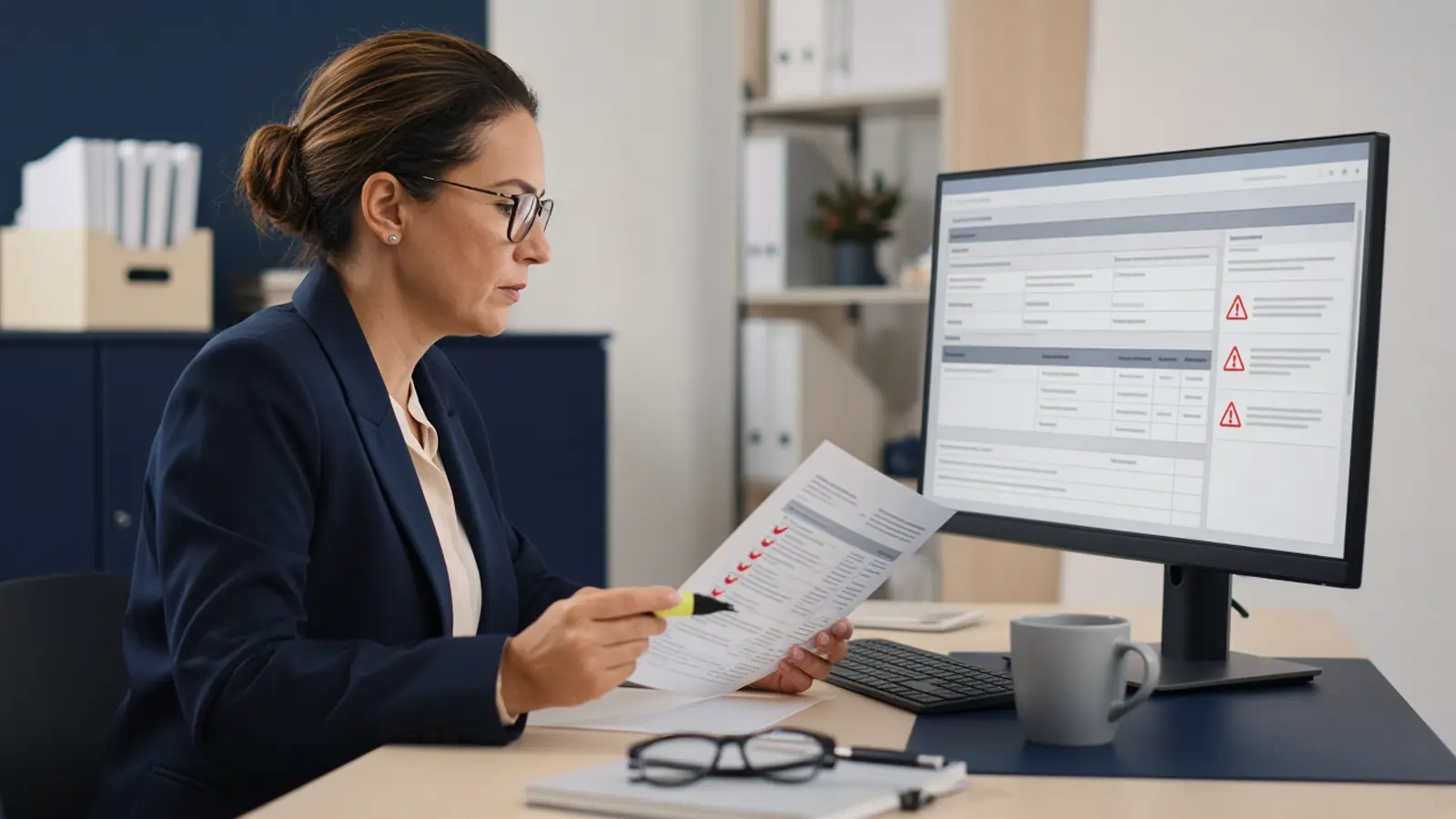
CARM changed where Canadian import accounting is recorded. It did not change where the data comes from. A broker still builds each commercial accounting declaration (CAD) from the commercial invoice, the air waybill or other cargo document, and what the importer has on file. For aircraft parts, add a release certificate whose part number should match the invoice.
TL;DR. CARM is the CBSA system of record for duties and taxes since 21 October 2024. The CAD lines come from invoice data: description, quantity, value, currency, origin, and the classification the broker assigns. The cargo control number comes from the carrier's transport document. Extract invoice lines and AWB data first, check them against each other, then classify. Doana builds custom extraction pipelines on a broker's own files, with CSV output in the layout of the broker's customs software. Doana does not file in CARM.
Which documents feed a CAD?
| Source | Fields for the declaration |
|---|---|
| Commercial invoice (or Canada Customs Invoice) | Vendor, purchaser, invoice number, currency, per-line description, quantity, unit price, origin |
| AWB or HAWB | Carrier, cargo control number, pieces, weight, port of arrival |
| Importer profile | Business number, delegation to the broker, security for release |
| Broker's own work | Tariff classification, tariff treatment, value for duty adjustments |
Invoice requirements: D1-4-1. Coding of accounting fields, including air mode code 1 and the mandatory invoice or PO number: D17-1-10. Context for aviation importers: CARM for aviation importers.
What should be checked before classification?
- Invoice lines against the AWB. Pieces and weight. A gap means a missing box or a second invoice.
- Invoice lines against the release certificate. Part number and serial on the Form 1, 8130-3 or TCCA Form One. See Form 1 part number does not match the invoice.
- Exchange and repair invoices. Repair charge, core charge, and whether the part is returning from repair abroad, which can bring the Repair Abroad remission into play (AOG imports into Canada).
- Descriptions. "Aircraft parts" is not enough to classify. Aircraft parts can fall under heading 88.07 or elsewhere (engines, instruments, tyres).
Where does extraction fit?
Between the email and the broker's customs software. Brokers already have software that builds and transmits the CAD. What they lack is the data typed in. An extraction pipeline reads the invoices, AWBs, packing lists and certificates the importer sends, and produces a file the broker's software imports, with each value traceable to its document.
Doana sets up these pipelines per broker, on the broker's own documents and in the layout its software expects. The self-serve product covers EASA Form 1 box by box and invoice lines in the web app. See CARM customs automation or the contact form.
What stays with the broker?
Classification, tariff treatment, value for duty, the CAD itself and its transmission. The broker signs off on the data. Extraction removes the retyping before that.
Next
Pick the ten importers who send the most aircraft-parts files and list the documents each one sends. That list decides what a pipeline has to read first.
Sources
- https://www.canada.ca/en/border-services-agency/services/carm.html
- https://www.cbsa-asfc.gc.ca/publications/dm-md/d1/d1-4-1-eng.html
- https://www.cbsa-asfc.gc.ca/publications/dm-md/pdf/d17-1-10-eng.pdf
- https://www.cbsa-asfc.gc.ca/publications/dm-md/d17/d17-1-4-eng.html
- https://doana.ca/en/carm-customs-automation
- https://doana.ca/en/contact