

Under CARM, a broker still builds each commercial accounting declaration from the invoice, the transport document and the importer's data. Which fields feed the CAD, which checks come first, and how an extraction pipeline fits a broker's existing software.
CARM will not teach you Form 1. CARM is the CBSA Assessment and Revenue Management system, system of record for duties and taxes on commercial imports from 21 October 2024 (CARM, schedule, CN 24-27).
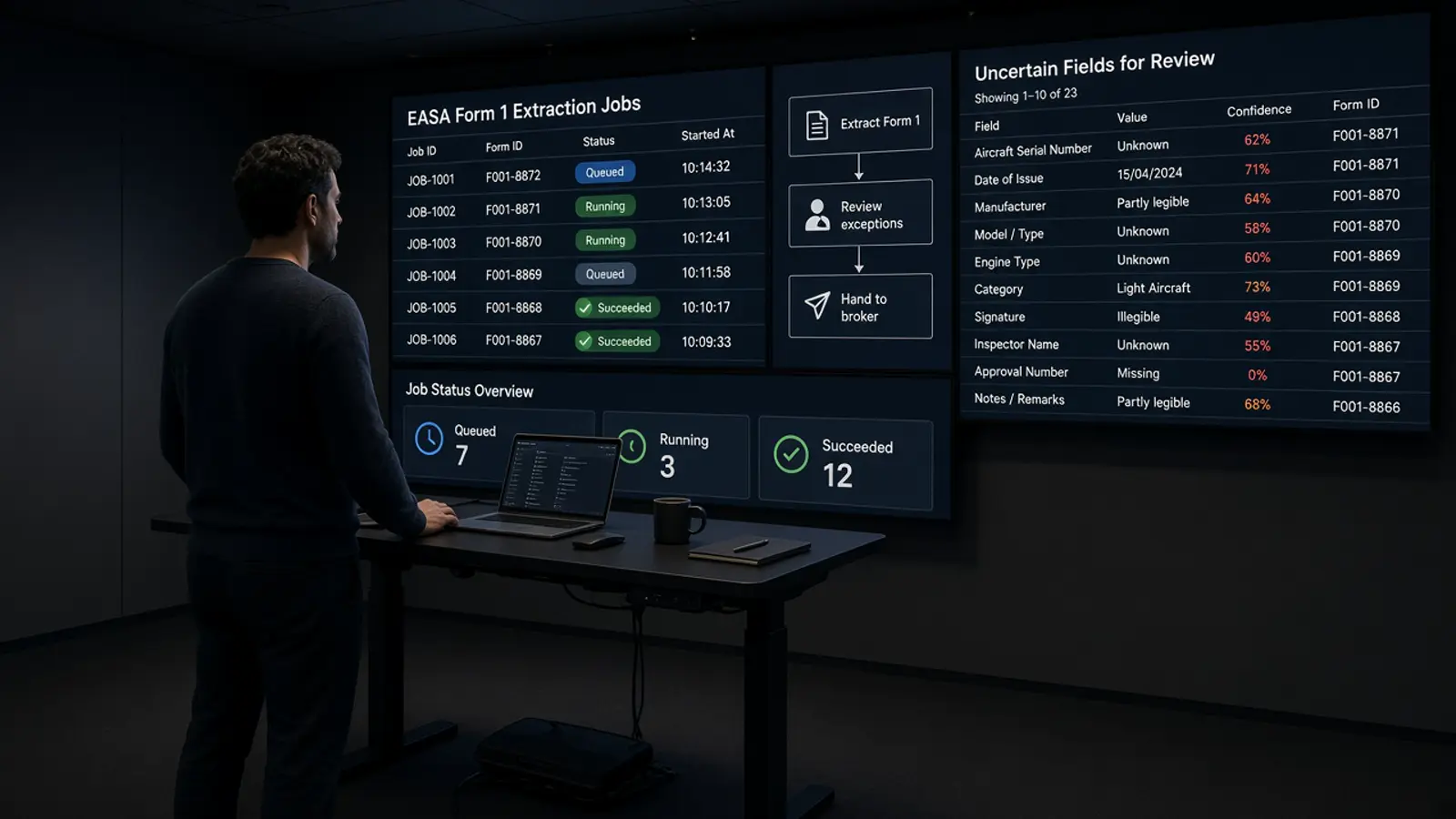
Aerospace freight carries documents general customs AI was not built for: release certificates, house bills for AOG parts, transit documents. Six criteria to compare tools, and the three kinds of software on the market.

In an AOG, the release certificate is the document most likely to stop a part at receiving. Where AI helps (reading type, part number and blocks before the part ships) and where a person still decides.

Typing HS 8803 into an AOG invoice in 2026 is a 2017 heading. From HS 2022, heading 8803 is deleted.
The T1 lives in NCTS, but the broker at destination often receives it as a PDF of the Transit Accompanying Document. Which fields to extract, how to check them against the AWB and invoice, and where OCR goes wrong.

ICS2 is the IT system. ENS is the Entry Summary Declaration for goods to or through the EU, including air pre-loading (PLACI). A Form 1 does not lodge either of them.
AWB OCR is useful when the carrier data feed is missing: a forwarder PDF, a house bill, a scanned copy. Which fields matter for clearance, which errors OCR makes on air waybills, and which checks catch them.
A broker retypes the same fields from every aircraft-parts shipment: invoice lines, AWB number, pieces and weight. What to extract from each document, what to check between them, and how Doana sets up an extraction pipeline on a broker's own files.

AOG inboxes still default to “aircraft spare parts.” That string often fails to match Form 1 Block 7 or the invoice noun-name.